
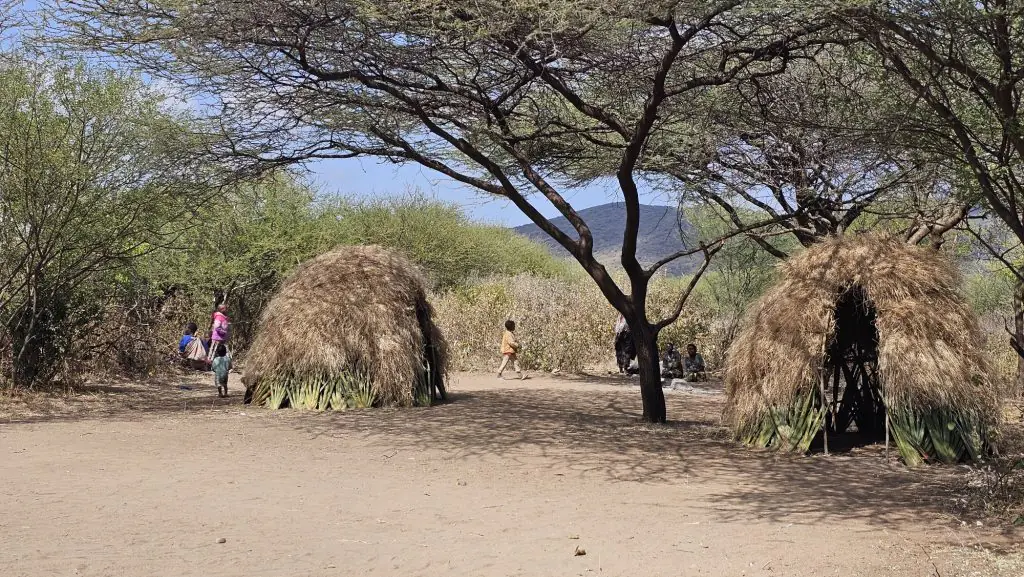
Who Are the Hadzabe?
The Hadzabe (also called Hadza) are one of the last hunter-gatherer peoples left on Earth, numbering somewhere between 1,000 and 1,500 today. They live around the Lake Eyasi basin in northern Tanzania, in the same general territory archaeologists believe hunter-gatherer communities have occupied for around 50,000 years not far from Olduvai Gorge, often called the cradle of mankind.
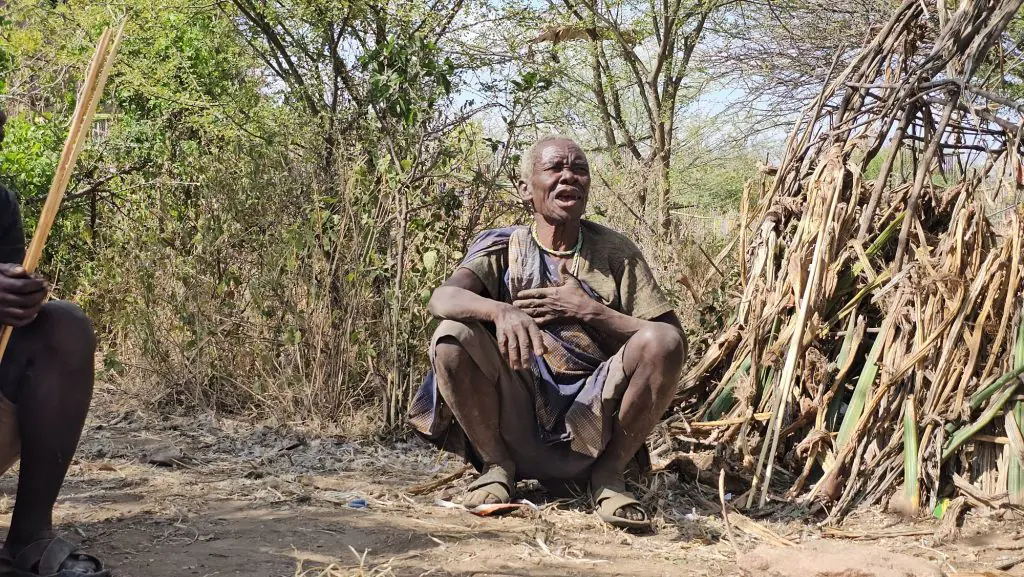
What sets them apart isn’t just how long they’ve been here. It’s how little has changed. While neighboring groups took up farming or herding generations ago, the Hadzabe never did. There are no chiefs, no fixed homes, no stored food. Camps of twenty or thirty people move every few weeks, following water and game. Decisions get made by consensus, not hierarchy.
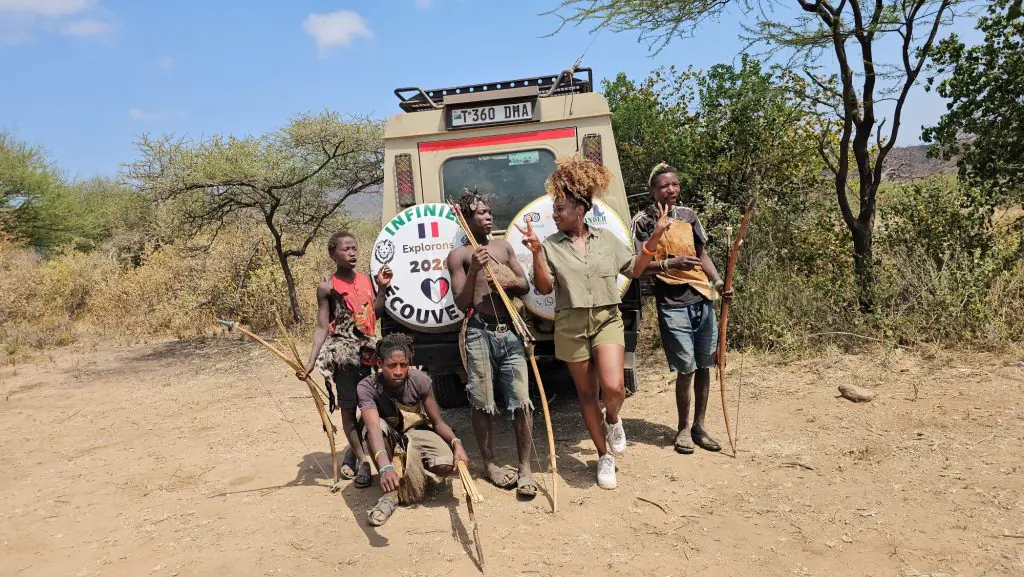
Their language is its own surprise a string of sharp clicks and pops that linguists classify as an isolate, meaning it isn’t related to any other known language on Earth.
What an Actual Visit Looks Like
Forget the idea of a roped-off cultural display. A real visit starts before sunrise, because that’s when the Hadzabe hunt.
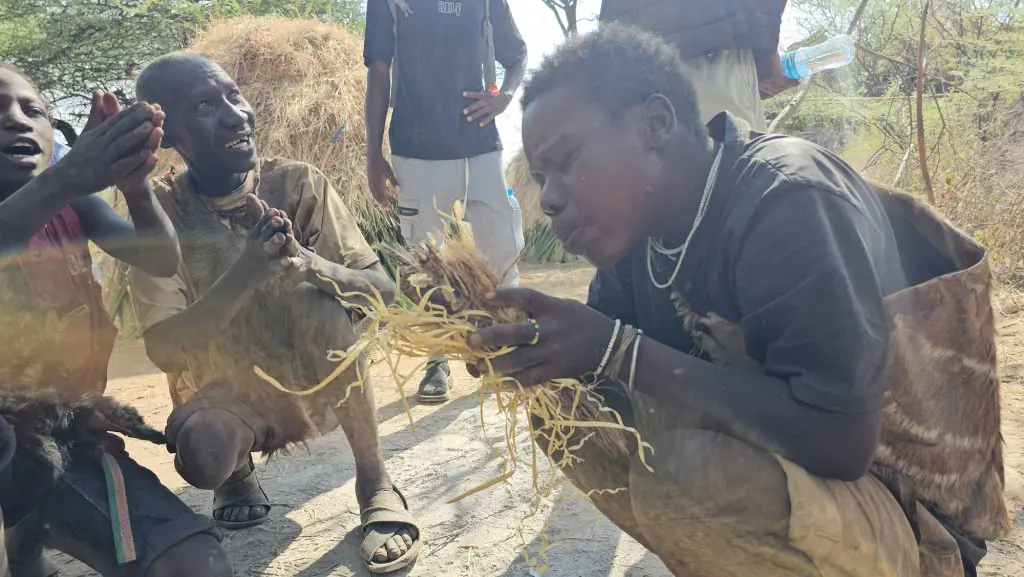
You’ll walk out with the men quietly, since talking scares off game as they scan the bush with bows drawn from memory rather than sight. Arrows are tipped with a poison made from a local plant, strong enough to bring down anything from a bird to a baboon. Whether the morning produces anything depends entirely on the bush that day. Some mornings end with nothing. Some end with everyone gathered around a fire an hour later
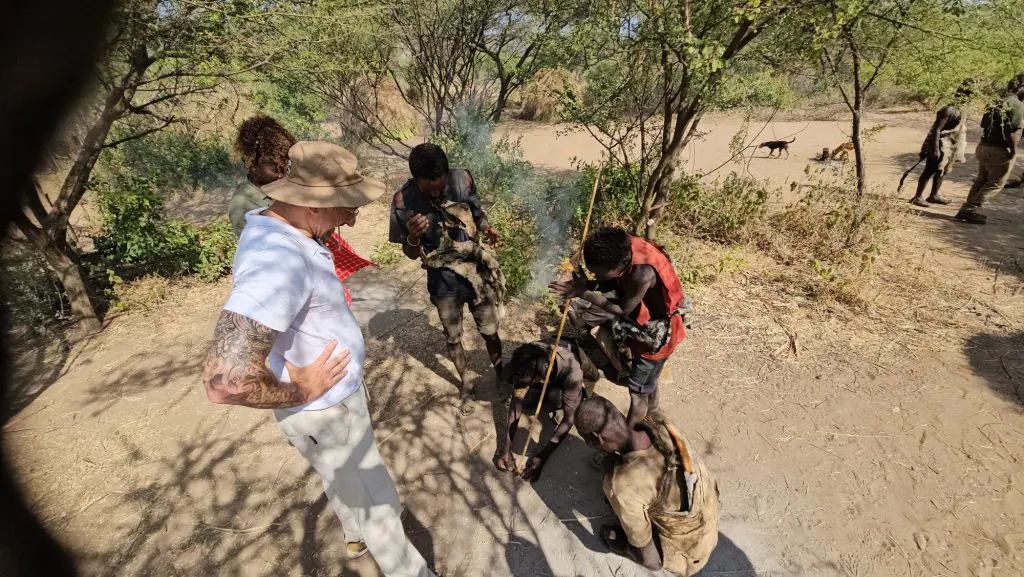
Afterward, it’s honey. The Hadzabe have a working relationship with a small bird called the honeyguide, which leads hunters straight to wild beehives in exchange for a share of the wax afterward a partnership that’s survived as long as the people themselves. Watching someone climb a baobab trunk, smoke out a hive with bare hands, and come down with a fistful of honeycomb is the kind of thing that doesn’t translate to video nearly as well as it does standing there.
Women and children forage separately, gathering tubers, berries, and baobab fruit by some estimates, gathering provides more of the daily diet than the hunt does.
What Nobody Tells You Beforehand
A few things worth knowing before you go:
It’s not staged, which means it’s unpredictable. Some visitors get a successful hunt and an hour of honey-harvesting. Others get a quiet walk and a lot of waiting. That unpredictability is the point it’s real life, not a show.
You’ll do more listening than talking. Communication runs through your guide, who translates between Hadzane and English (or Swahili). The clicks take some getting used to, even secondhand.
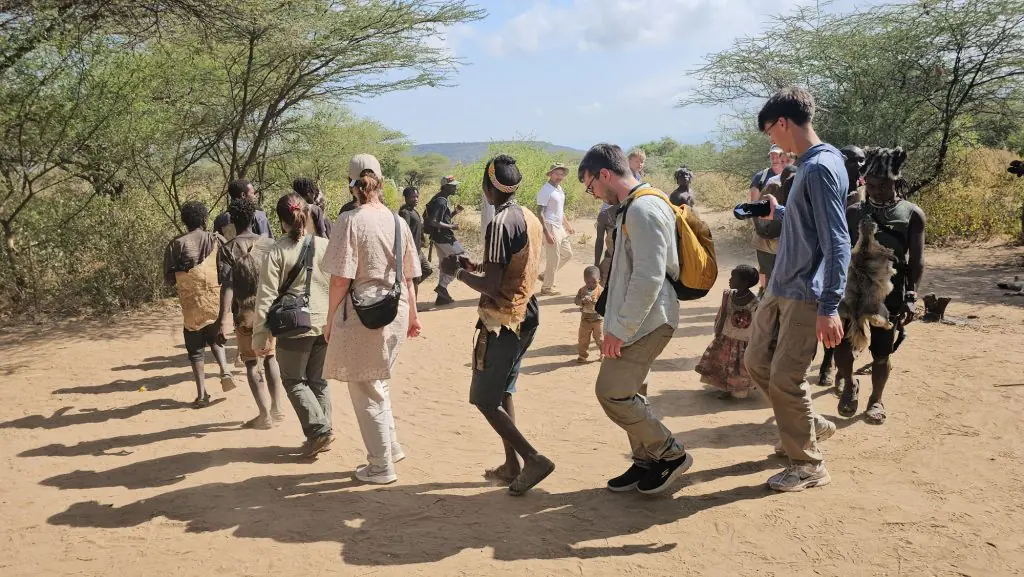
Bring sturdy shoes. The terrain is dry, rocky, and uneven. This is a walking visit, not a vehicle one.
Tourism is a complicated topic for the Hadzabe. Their land and lifestyle face real pressure from farming encroachment and conservation restrictions. Responsible visits through guides who work directly with the community and ensure fair compensation are part of what helps sustain their way of life rather than erode it. It’s worth choosing who you visit with carefully.
Why This Stays With People
There’s a particular kind of quiet that settles in on the walk back to camp. Maybe it’s the heat. More likely, it’s the sense of having spent a few hours next to something genuinely rare a way of living that predates agriculture, cities, and most of what we’d call civilization, still going, right there in the bush.
Curious what a Hadzabe visit actually looks like as part of a trip?
We run a small-group Hadzabe & Walking Safari combo out of Lake Eyasi, paired with a Datoga blacksmith village visit and guided bush walks.